OpenWorldLab

Where knowledge gets made, and shared.

Researchers write their papers, publish their results and raise money for the next experiment on OpenWorldLab. You can read the work, follow the people doing it and try the science for yourself.

See the five ways in

Five ways in

From your first question to running your own lab, and backing someone else's.

01For students, teachers and anyone curious

Get curious

Play with simulations of real physics and maths, follow a question through the papers behind it, and have any passage explained at your level.

Playground
Simulations with written guides: galaxies, fractals, light, electromagnetism, fluids, epidemics and more. Change a value and watch what happens.
Literature Explorer
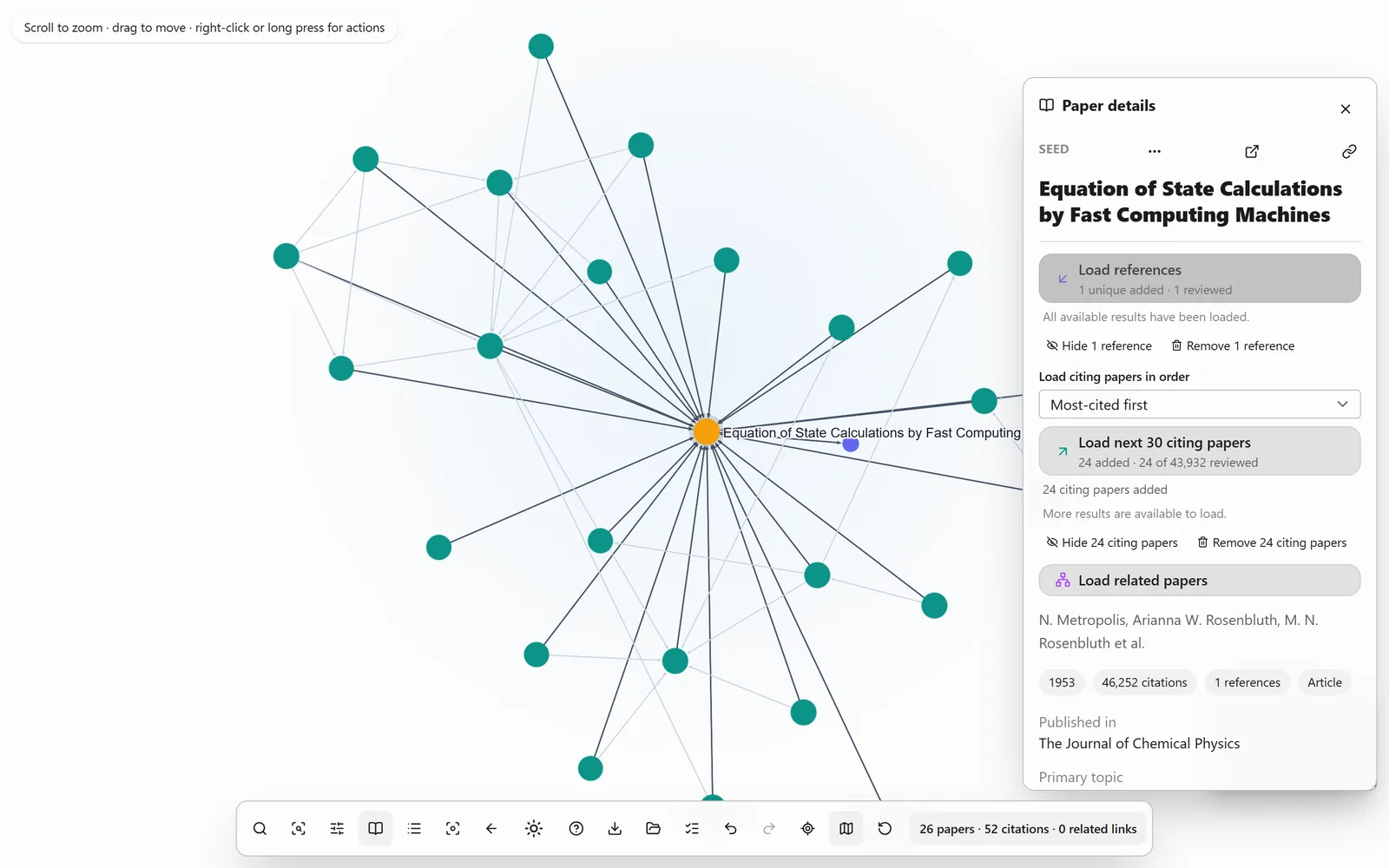
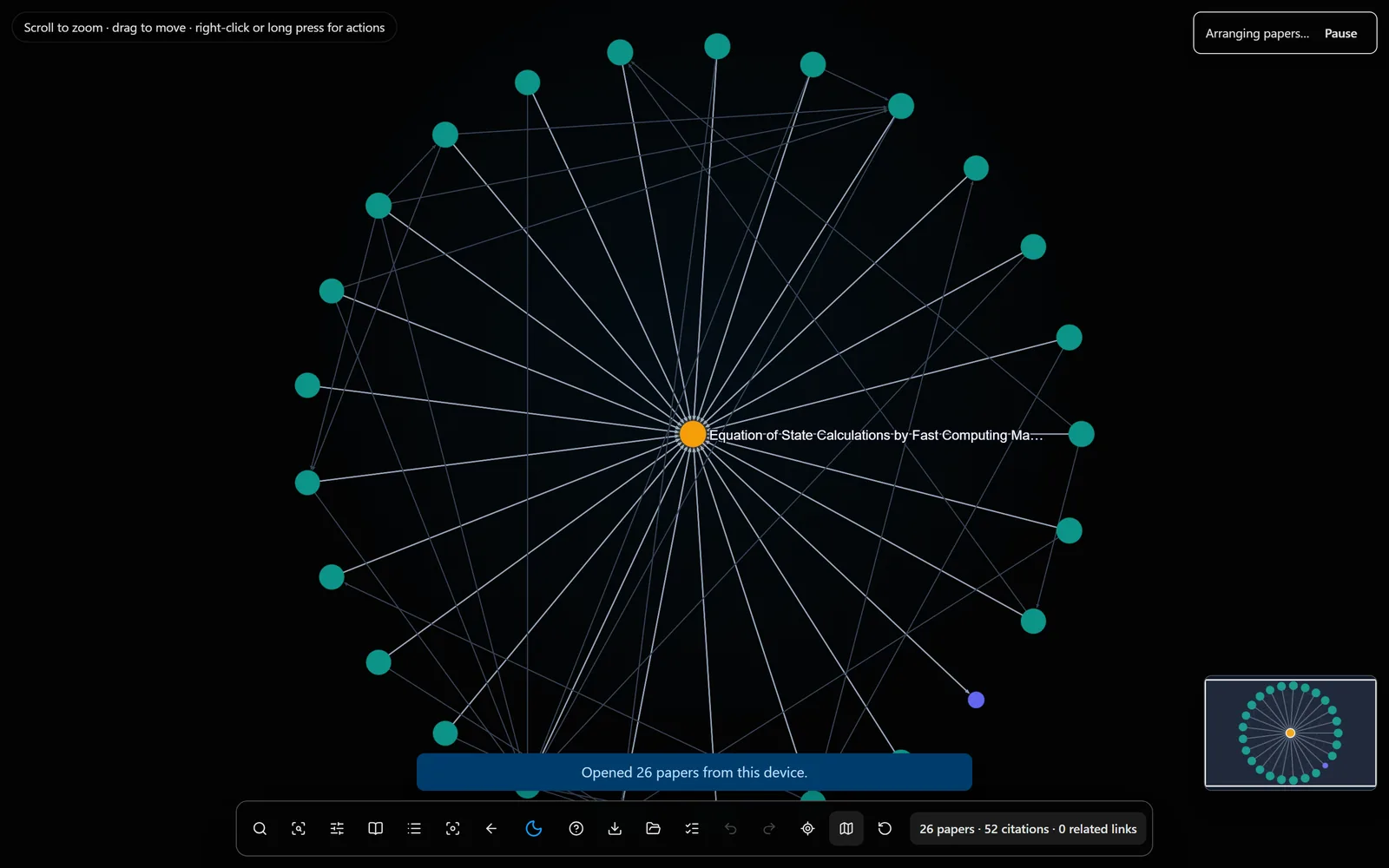
Search for a paper and see what it cites and what cites it, drawn as a graph you can walk through.
Research Area Explorer
Browse more than 6,000 research areas, from broad disciplines down to single topics, and see the articles, people and groups in each.
Articles from the people doing the work
Researchers write about their own results here, with maths, code and figures.
Explain for me
Select a passage you don’t follow and OWL explains it at your level. It learns what you already know as you read, and you can see and export what it remembers.

Open the playground

02For researchers and the people who follow their work

Find your people

Follow researchers and their groups, and talk to them directly.

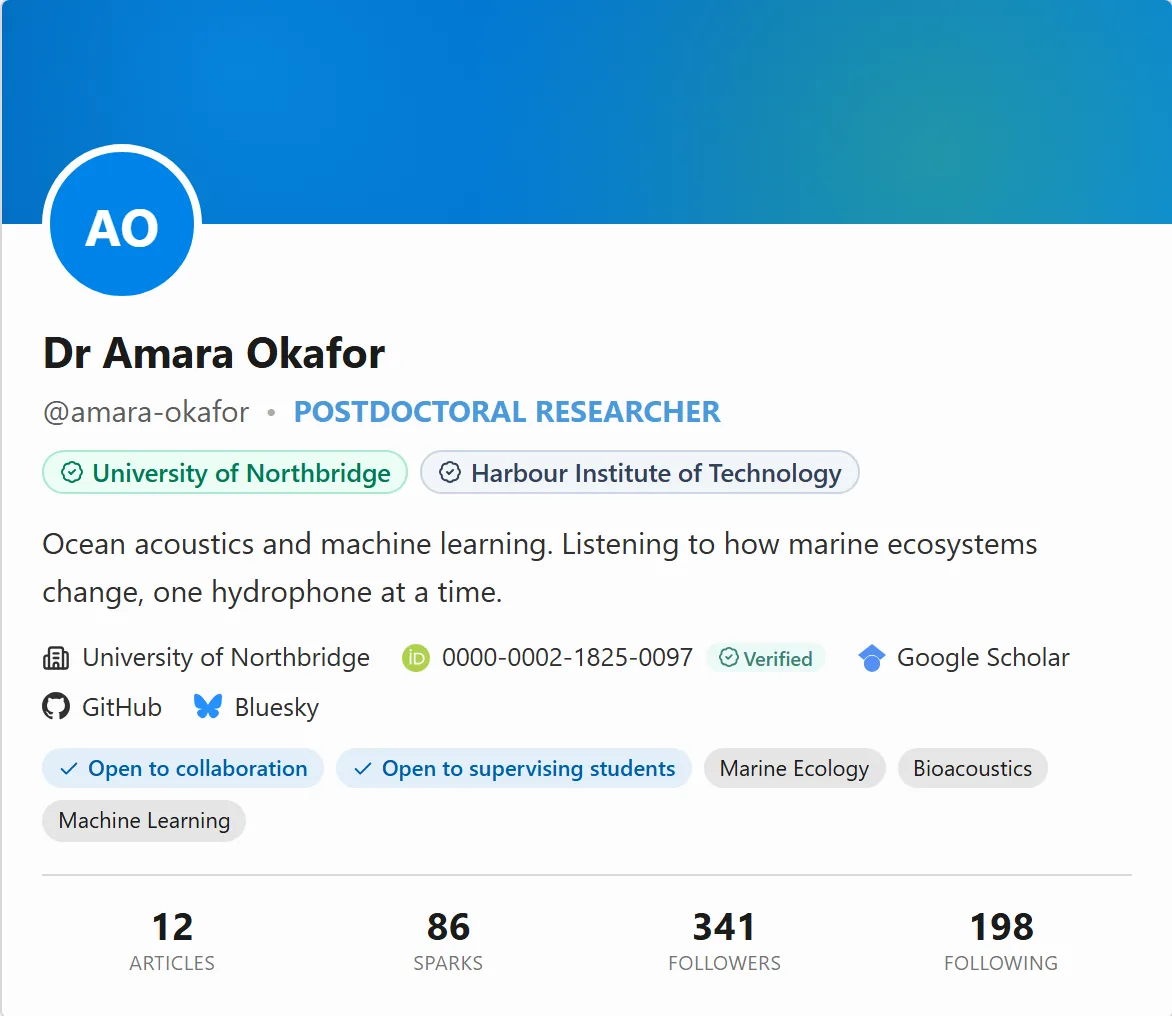
Verified profiles
Link your ORCID iD and confirm your institution by email. Your profile shows what OWL checked, so readers can trust who they are reading.
Groups and hierarchy
Labs, departments, universities, consortia, foundations, companies and community groups each run a page. A lab's posts also appear on the pages of the groups above it.
Your feed
New articles and sparks from the people and groups you follow, in one stream.
Messages
Write to a researcher without hunting for an email address. Every group also has a chat room for its members.
Browse groups
A sample researcher profile with a verified university affiliation, an ORCID iD and research interests
A sample profile. OWL checked the green badges.

03For students and early-career researchers

Find opportunities

PhD places, postdocs, seminars and workshops, sorted by field, with an email when something new matches.

Jobs
PhD places, postdocs and research posts in one list you can filter by field, place and type.
Events
Seminars, conferences and workshops, in person or online, with a link to register and a button to add them to your calendar.
Alerts
Save a search for jobs or events in your field, and OWL emails you when something new matches.
See open jobs

04For researchers, labs and departments

Do the research

Keep your files, write your paper, read with an assistant, publish, and pay for the next experiment, all next to your group.

Files and workspaces
Keep your files and your group’s in shared folders. Preview them, comment on them and search inside them.
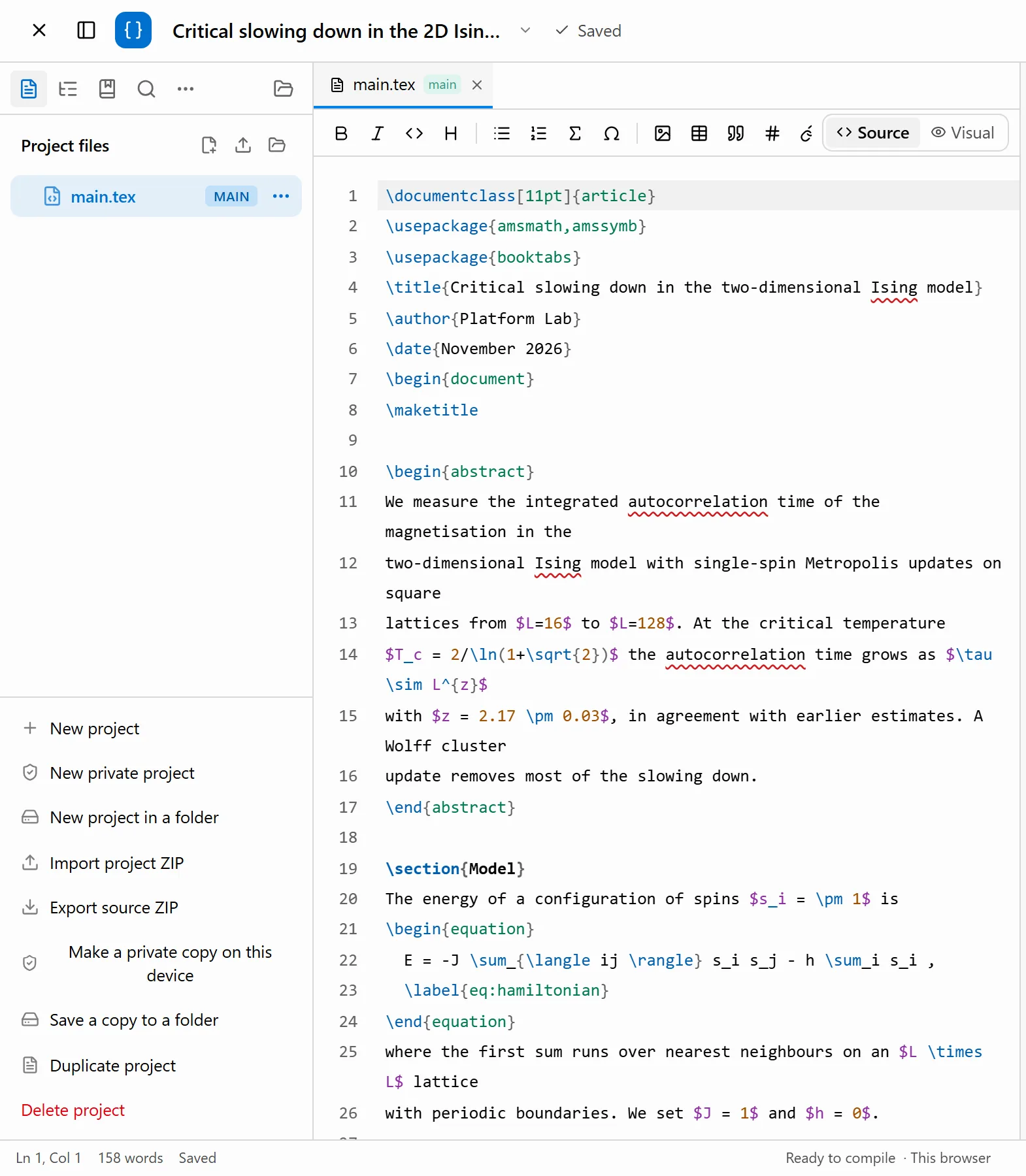
LaTeX editor
Write papers in the browser, compile them on the spot, and let co-authors leave review comments on the source.
Ask your documents
Ask a question about a file or a whole folder, and get an answer that cites the pages it came from.
AI Studio
Turn your notes or a paper into a draft article for a general reader, then edit it before you publish.
Publishing and reach
Post short sparks or full articles, and see where your readers come from.
Funding campaigns
University groups can raise money for a named cost, such as an instrument or a field season, from people who want to see the work done.
See the tools
A paper on the Ising model open in the LaTeX editor, with its project files beside the source
A paper in the LaTeX editor. Its data and lab notes sit in the group's files.

05For backers, donors and foundations

Back the research

Pay for a piece of research you care about, follow what it finds, and leave your name on the work.

Back a named cost
Each campaign says what the money buys, line by line, and you can pay for one line. A reviewer checks every campaign before it can take money.
Follow what it finds
The group posts updates as the work goes on, and you hear about each one. Everything you have given sits in one list in your settings.
Your name on the work
Backers are listed on the campaign and on the backers' leaderboard, or appear as Anonymous if they prefer.
Community bounties
Community and public-interest groups can offer bounties and open challenges for problems they want solved.
Why fund research
What research has done for the world, and where grant money runs short.
A page for your foundation
Start a page for your foundation or programme, link the groups you fund under it, and follow what they publish and who reads it.
Browse campaigns
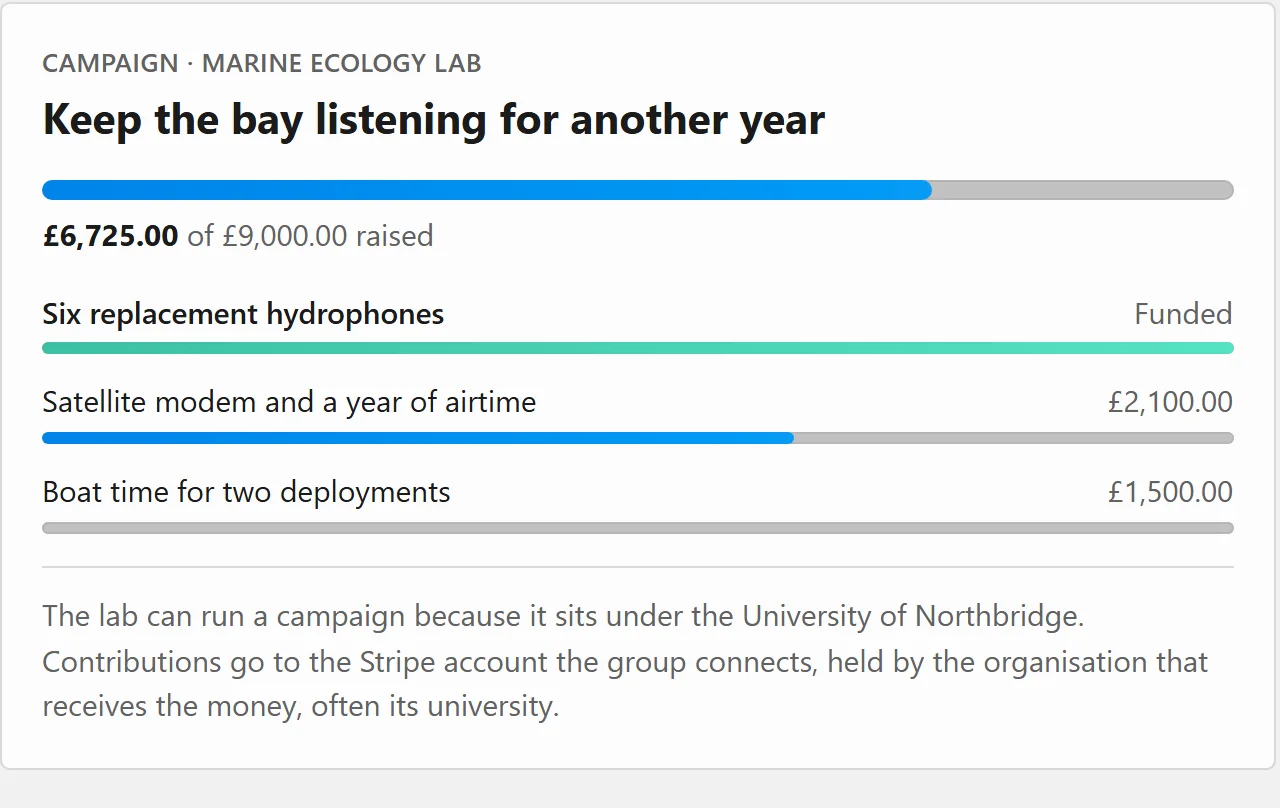
A sample campaign to keep a bay listening for another year, with three budget lines, one of them funded

For labs, departments and universities

Your lab, your department, your university

Each lab, department and university runs its own page, and the pages link up the way your institution does. When a lab publishes an article, posts a job or opens a campaign, it also appears on the department's page and the university's.

Post once, seen at every level
Nobody copies news from the lab page to the department page. It is there already.
Both sides agree to a link
A lab asks to join a department, and the department approves. Either side can end it.
See the reach of the whole institution
A department's readers and followers include those of every group below it.

Pick a group to see its page the way a visitor would.

Part of Affiliated (no roll-up)

Department of Biology

Department

Part of
Faculty of Science
Articles
52
Open jobs
3
Events
6
Campaigns
2

From 3 groups: Department of Biology, Marine Ecology Lab, Coastal Sensing Centre.

A sample university. Each page counts its own work and the work of every group below it.

For research groups raising money

Pay for the next experiment

A campaign raises money for one named cost: an instrument, a field season, a year of data. Backers see the budget line by line, and the group posts updates as the work goes on.

Checked before it goes live
A reviewer approves every campaign before it can take money.
Paid out as it arrives
Contributions go to the Stripe account the group connects, often its university's, less a 5% fee shown before anyone pays.
Open to groups at universities
Other groups can join the waiting list.

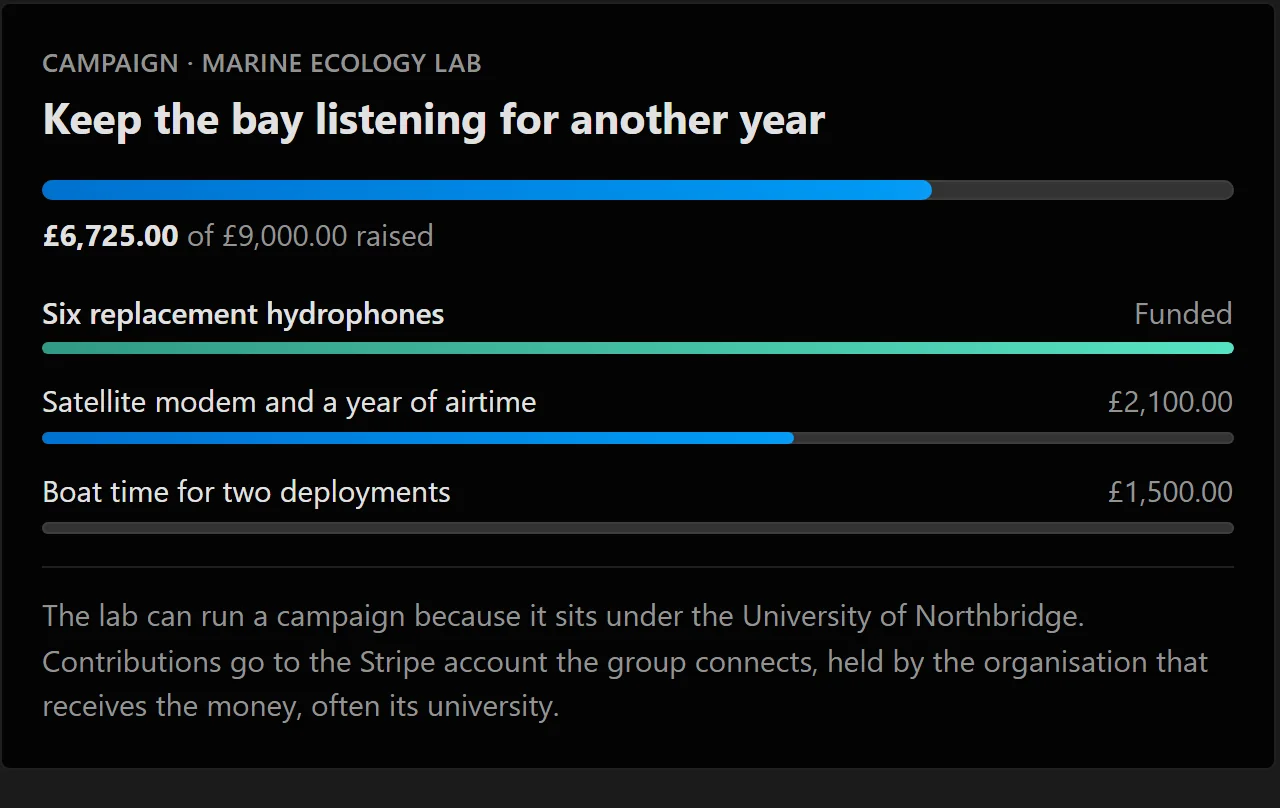
Campaign · Marine Ecology Lab

Keep the bay listening for another year

£6,725.00 of £9,000.00 raised

  • Six replacement hydrophones Funded
  • Satellite modem and a year of airtime £2,100.00
  • Boat time for two deployments £1,500.00

The lab can run a campaign because it sits under the University of Northbridge. Contributions go to the Stripe account the group connects, held by the organisation that receives the money, often its university.

What a contribution costs

OWL’s fee is 5%, card processing included. The checkout shows this breakdown before anyone pays. A group can also add the fee on top, so the whole amount reaches it.

You pay £50.00
Platform fee (5.0%) −£2.50
The group receives £47.50
How fees work

A sample campaign. Pick an amount to see what a backer pays and what reaches the group.

One project, start to finish

Follow a sample project: a study of how the Ising model slows down near its critical temperature. Every picture below is a screen on OWL.

  1. The Literature Explorer graph around the 1953 Metropolis paper, with its citing papers fanned out

    1 Read

    Start from the paper the field builds on, and see which work followed it.

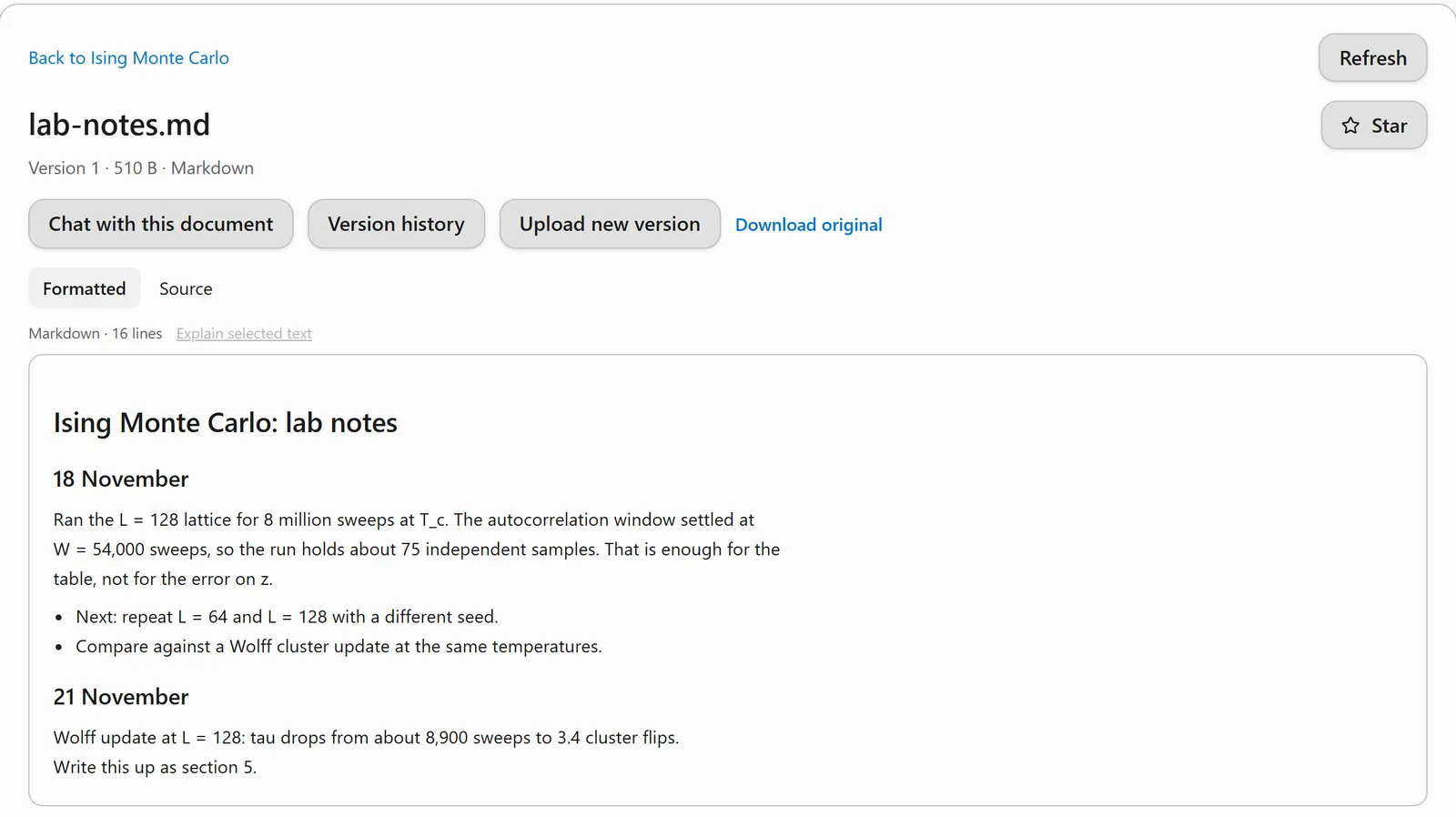
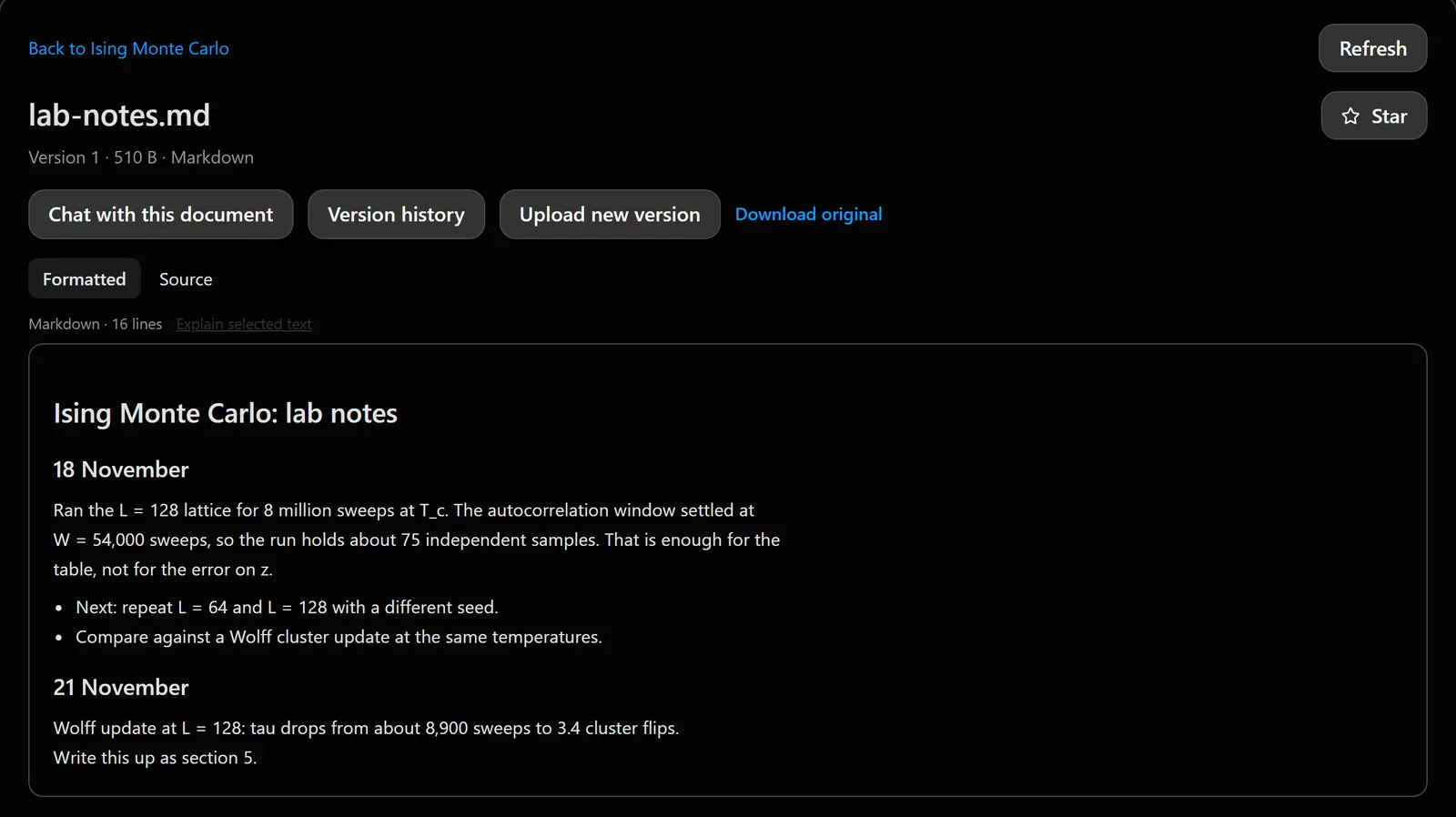
  2. Lab notes on Monte Carlo runs, open in Files with a Chat with this document button

    2 Record

    Keep notes and results in a folder your group can open.

  3. A paper on critical slowing down in the Ising model, open in the LaTeX editor

    3 Write

    Write the paper in LaTeX beside the data, and ask co-authors to review it.

Then publish the result as an article and see who reads it, raise money for the next run, and advertise the PhD place it needs. See each step in the tour

What OWL does that your current tools don't

You want toToday you might useWhat OWL does better
Show your work and be foundResearchGate, LinkedInOWL checks your affiliations instead of taking your word for them, and what you post also reaches the followers of your department and university.
Write a paper with co-authorsOverleaf, Google DriveThe paper, its data and your notes sit in one group folder, under one login, and you can ask questions of all of them at once.
Pay for one instrument or field seasonExperiment.com, GoFundMeBackers find the campaign next to your lab, your papers and your updates, so they back people whose work they can follow.
Advertise a PhD or postdocjobs.ac.uk, your university sitePosting is free, and one listing appears on your lab's page, your department's page and the job list, in front of people who already follow you.
Explain your field to the publicA blog, a newsletterWrite with maths, code and figures. Each reader can have any passage explained at their own level, and you see which fields your readers come from.

Start with a free account

Free for researchers and labs. Higher AI and storage limits come with memberships. You keep your data.